
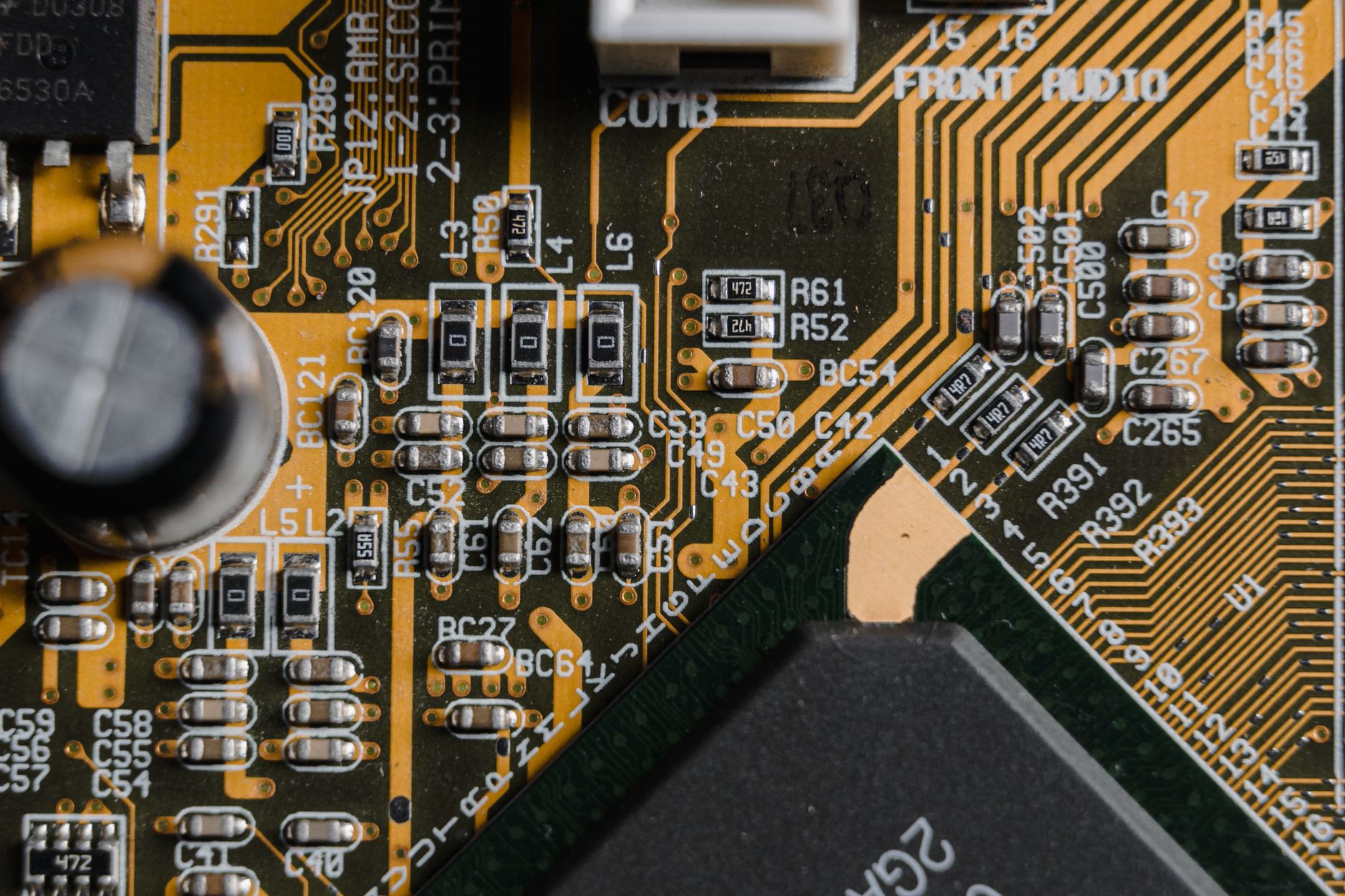
Semiconductors are essential components that play a crucial role in modern electronics. Understanding their function and types can enhance your knowledge of various devices we rely on daily. This article explores what semiconductors are, their different types, features, and how they operate in the technology around us.
From smartphones and computers to household appliances, semiconductors are integral in controlling the flow of electricity. This article will clarify the significance of semiconductors, their characteristics, and their impact on technology.
What Is a Semiconductor?
A semiconductor is a solid material whose electrical conductivity falls between that of an insulator and a conductor. This unique property allows semiconductors to control electrical flow, enabling their widespread use in electronic devices.
Semiconductors such as silicon and germanium have a fundamental role in creating components like diodes, transistors, and integrated circuits, forming the backbone of modern electronic systems.
Types of Semiconductors
Semiconductors can be categorized into two main types based on their composition and functionality: intrinsic and extrinsic semiconductors.
Intrinsic Semiconductors
An intrinsic semiconductor is a pure semiconductor material without any significant impurities or additives. These materials typically exhibit limited conductivity at room temperature and improve when heated.
Common examples include:
- Silicon (Si)
- Germanium (Ge)
Intrinsic semiconductors rely on thermal energy for electron excitation, allowing a limited number of charge carriers to be present for electrical conduction.
Extrinsic Semiconductors
Extrinsic semiconductors are formed by doping intrinsic semiconductors with specific impurities to enhance their electrical conductivity. They can be classified into two types:
N-type Semiconductors
N-type semiconductors are created by adding elements that have more electrons than the semiconductor material. These extra electrons serve as negative charge carriers.
Common dopants include:
- Phosphorus (P)
- Arsenic (As)
- Antimony (Sb)
The presence of these dopants increases the number of free electrons, which facilitates better conductivity.
P-type Semiconductors
P-type semiconductors are formed by doping with elements that have fewer electrons than the semiconductor base material, creating “holes” that act as positive charge carriers.
Common dopants include:
- Boron (B)
- Gallium (Ga)
- Indium (In)
The addition of these elements increases the number of holes, enhancing the semiconductor’s conductivity through positive charge movement.
Features of Semiconductors
Several key features make semiconductors integral to electronic devices:
Conductivity Control
One of the most important characteristics of semiconductors is their ability to control electrical conductivity. This property can be modified by changing factors such as temperature, doping, and the application of electric fields.
Band Gap Energy
Semiconductors possess a band gap between the valence band (where electrons are present) and the conduction band (where electrons can move freely). The size of this band gap determines the semiconductor’s electrical properties and its ability to conduct electricity.
Temperature Sensitivity
The conductivity of semiconductors is temperature-dependent. As temperature increases, more electrons are excited into the conduction band, which enhances conductivity. This property enables temperature sensors and other climate-responsive applications.
Versatility
Semiconductors can be engineered for various applications, ranging from amplifiers to microprocessors. Their ability to form junctions, such as p-n junctions, is crucial in the design of diodes and transistors, making them versatile components in electronic circuits.
How Do Semiconductors Work?
To understand how semiconductors function, we must explore their operation within electronic components like diodes and transistors.
Diodes
A diode is a two-terminal electronic component that allows current to flow in one direction while blocking it in the opposite direction. This functionality is based on the p-n junction formed when a p-type semiconductor is joined to an n-type semiconductor.
When a forward bias voltage is applied (positive to the p-side and negative to the n-side), charge carriers move across the junction. Electrons from the n-side recombine with holes on the p-side, allowing current to flow. In contrast, when reverse bias is applied, the electric field widens the depletion region, preventing current flow.
Transistors
Transistors are three-terminal devices that can amplify or switch electrical signals and power. The most common types are bipolar junction transistors (BJT) and field-effect transistors (FET). They function based on the interaction between n-type and p-type semiconductors.
Bipolar Junction Transistors (BJT)
BJTs operate using both electrons and holes as charge carriers. They have three layers (emitter, base, collector) and can be configured as either NPN or PNP types, enabling them to amplify current. By applying a small current to the base, a larger output current flows through the collector and emitter terminals.
Field-Effect Transistors (FET)
FETs use an electric field to control the current. The most common type, the metal-oxide-semiconductor FET (MOSFET), consists of a gate, drain, and source. Voltage applied to the gate creates an electric field that induces a conductive channel between the drain and the source, facilitating current flow.
The Role of Semiconductors in Modern Technology
Semiconductors are at the heart of countless technologies that shape our daily lives. Here are a few areas where they play a critical role:
Computers and Mobile Devices
All computing devices depend on semiconductors for processing, memory, and storage. Components such as CPUs, GPUs, RAM, and flash memory rely on semiconductor materials to function effectively. As a result, semiconductors drive advancements in computing power and efficiency.
Consumer Electronics
From televisions and gaming consoles to washing machines and microwaves, semiconductors enable sophisticated control systems in consumer electronics, enhancing functionality and energy efficiency.
Telecommunications
Semiconductors regulate signal processing and transmission in communication devices. They enable the operation of radios, cellular networks, and other wireless communication technologies, facilitating global connectivity.
Automotive Technology
Modern vehicles incorporate numerous semiconductor devices for various systems, including engine control units, advanced driver-assistance systems (ADAS), and infotainment systems. As the automotive industry moves towards electric and autonomous vehicles, the reliance on semiconductors will continue to grow.
Challenges and Future of Semiconductors
The semiconductor industry faces challenges such as supply chain disruptions, material shortages, and increasing complexity in manufacturing processes. As technology advances, further innovation is essential to meet growing demands for smaller, faster, and more efficient devices.
Researchers are exploring new materials, such as graphene and carbon nanotubes, to overcome the limitations of traditional semiconductors. Additionally, the development of quantum computing and AI technologies will require advanced semiconductor solutions to facilitate their efficiencies.
Conclusion
Understanding semiconductors provides insight into the technology that powers our world. Their unique properties and capabilities enable various applications, shaping everything from computing and telecommunications to consumer electronics and transport systems. As the industry evolves, the future holds exciting opportunities and innovations that will continue to redefine our connected world.
If you’re interested in further exploring technology, check out our informative guides on logic gates and computers. Each resource provides valuable insights into the building blocks of modern electronics.